
 0
0 

The Clarion Call for Second Sapiens Consciousness.
First published on Substack on June 16, 2025.
As someone who has been deeply immersed in the realms of Spiral Dynamics integral, I’ve dedicated a significant portion of my intellectual life to understanding the complexities of human consciousness and cultural evolution. I’ve seen how this model can illuminate the diverse values and perspectives that shape our world, providing valuable insights into everything from organizational dynamics to societal trends. However, recent experiences and deeper reflection have led me to a critical realization: as powerful as both, Spiral Dynamics and Integral Theory are, they currently lack the necessary frameworks to adequately address the scale and urgency of planetary collapse. We need to evolve; to move beyond the limits of our current understanding and embrace a new form of human intelligence I call Second Sapiens consciousness. This is the new developmental roadmap that will help us navigate the Anthropocene. It involves the transcendence of what planetary system scientists call the Human Exceptionalism Paradigm and the embrace of a New Ecological Paradigm that is far more inclusive in its wholeness.
For those less familiar, Spiral Dynamics, building on Clare W. Graves’s work, outlines a series of stages of development that individuals and societies progress through, each building upon the previous one. Integral Theory, spearheaded by Ken Wilber, offers a comprehensive framework that seeks to integrate different perspectives, including science, philosophy, art, and spirituality. Both models emphasize the importance of understanding and integrating different levels of consciousness for personal and collective growth.
But here’s the core issue: both Spiral Dynamics and Integral Theory, in their prevailing interpretations, were largely developed during a period of relative environmental stability – the Holocene. While they acknowledge the importance of ecological considerations, they tend to treat them as just one factor among many, rather than the defining context for all other aspects of human existence. We’ve been applying frameworks built for a relatively stable world to a world that is rapidly destabilizing. It’s like trying to use a map of a calm lake to navigate a turbulent ocean.

Think about it. Spiral Dynamics and Integral Theory identify stages of development, each with its own strengths and limitations. The “Green” stage, for example, values equality, community, and ecological awareness. But even a well-developed Green perspective can fall short when confronted with the sheer scale and complexity of planetary collapse. Green values can be undermined by a lack of systems thinking, a tendency to focus on local solutions without addressing the systemic drivers of environmental destruction. More importantly, Green is prone to the clever manipulation of the Orange system that has mastered the skill of giving it a bone (greenwashing is a good example), to keep it from realizing its full potential.
Similarly, Integral Theory emphasizes the importance of “waking up,” “growing up,” “cleaning up,” and “showing up” – attending to our inner lives, developing our cognitive capacities, healing our psychological wounds, and engaging in meaningful action in the world. But what if the very ground beneath our feet is shifting? What if the “world” we’re showing up to is on the verge of collapse? Integral Theory, in its current form, doesn’t adequately address the existential threat of planetary breakdown. Having just heard Wilber emphasize the importance of the 4 “ups” at the Integral European Conference, I’d like to add another up: “looking up”. Borrowing from the 2021 political satire movie Don’t Look Up, because doing so will make us see the deep shit we’re in. This is how Graves captured the deficiencies inherent in our exclusive focus on the inner quadrants to the exclusion of our existential reality. He describes it as the ceiling caving in on our heads as we sit in our meditative states contemplating our navel. The “ceiling caving in” are the planetary issues he identified as early as 1974.
This isn’t to say that these two models are irrelevant. Far from it. They provide essential tools for understanding the diverse values and perspectives that shape our responses to the environmental crisis. They can help us identify the limitations of different approaches, from the materialistic worldview of Orange to the traditionalism of Blue and the destructive behavior of Red. But we need to go further. We need to evolve beyond the limits of our current understanding and embrace a new level of consciousness – what I’m calling Second Sapiens consciousness.
Second Sapiens consciousness, as I envision it, is characterized by several key features:
- Planetary Awareness: First and foremost, it’s a deep and visceral understanding of the interconnectedness of all life on Earth and the fragility of the Earth’s systems. It’s not just an intellectual understanding, but a gut-level awareness that our actions have profound consequences for the entire planet. It’s what Joanna Macy calls “ecological self” – a sense of identity that extends beyond our individual selves to encompass the entire Earth community.
- Systems Thinking: Of life that is. Second Sapiens consciousness requires a capacity for complex systems thinking. We need to move beyond linear cause-and-effect thinking and embrace a more holistic understanding of how different systems interact and influence each other in a dance that seeks ecological and planetary balance. We need to be able to see the feedback loops, the tipping points, and the emergent properties that characterize what I call the Gaian sciences defined by the totality of the complex adaptive systems of life.
- Natural Intelligence: It’s about learning how to listen to and learn from the wisdom of nature. This involves recognizing the inherent value of all life forms, not just those that are useful to humans. It also involves embracing indigenous knowledge and traditional ecological practices that have sustained communities for centuries.
- Existential Courage: It’s about having the courage to face the enormity of the challenges we face without succumbing to despair or denial. It’s about acknowledging the possibility of collapse, while also holding onto the hope that we can still create a more sustainable future. It also means finding the resilience to keep acting in the face of uncertainty and setbacks.
- Ethical Responsibility: Second Sapiens consciousness implies a deep sense of ethical responsibility to future generations and to all life on Earth. It’s about recognizing that we are not the owners of the planet, but rather its custodians. We have a moral obligation to leave the Earth in a better condition than we found it.
- Transcending Anthropocentrism: Ultimately, Second Sapiens consciousness requires a transcendence of anthropocentrism – the belief that humans are the center of the universe and that all other life forms exist solely for our benefit. It’s about recognizing that we are just one species among millions, and that our fate is inextricably linked to the fate of all other species.
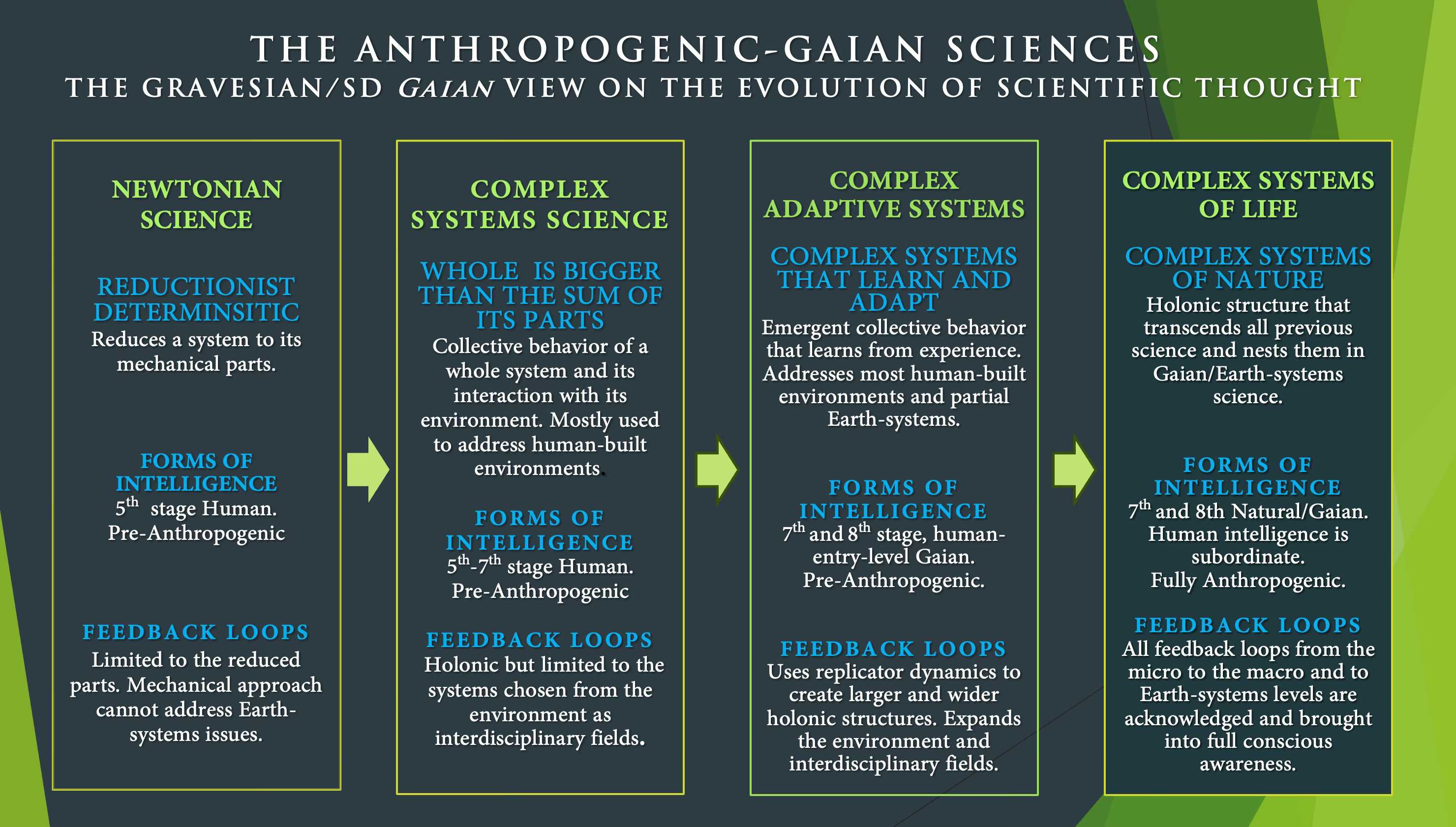
So, how do we cultivate Second Sapiens consciousness within the frameworks of Spiral Dynamics and Integral Theory? I believe it requires a deliberate effort to expand the scope and deepen the understanding of these two models. Beyond Spiral Dynamicsintegral, lies Spiral Dynamics Gaian, and here are some specific steps that will get us there:
- Integrating Planetary Boundaries: We need to explicitly integrate the concept of planetary boundaries into Spiral Dynamics and Integral Theory. This means recognizing that crossing these boundaries poses an existential threat to human civilization and that all human development models, not just these two, must be nested in this larger holonic structure without which life itself is not possible.
- Nesting the Green Stage in Gaian intelligence: The Green stage needs to be expanded to incorporate a more sophisticated understanding of ecological systems and the systemic drivers of environmental destruction. We need to move beyond the labeling of the stage as the “mean green meme” that equates to deconstructionism and surface reactions and recognize that without empowering its healthy more complex manifestation, our movement to Second Sapiens consciousness will be greatly impaired.
- Re-evaluating the Yellow Stage: This stage, which emphasizes systems thinking and holistic integration, holds the key for fostering Second Sapiens consciousness. However, we need to ensure that a new Yellow perspective is grounded in a deep understanding of the much higher holonic structure of planetary realities and ethical responsibilities.
- Integrating Indigenous Wisdom: Indigenous knowledge and traditional ecological practices offer invaluable insights into sustainable living and ecological harmony. This is the re-embrace of the simplicity that existed in the Purple stage while using best practices and lessons learned in our journey from the Red to Green stages of our First Sapiens existence. It is what I call the brain-heart-soul syndicate that defines the models on the other side of the Holocene.
- Embracing the Dark Side: Spiral Dynamics and Integral Theory tend to focus on positive development and integration. We are swimming in positive psychology that ignores everything negative. Second Sapiens must acknowledge the shadow side of human consciousness and the destructive tendencies that have led us to the brink of planetary collapse. This involves facing our collective traumas and working to heal the wounds that have driven us to exploit and dominate the natural world.
- Cultivating Existential Resilience: As we confront the challenges of the Anthropocene, we need to cultivate existential resilience – the capacity to face the possibility of collapse without losing hope or succumbing to despair. This involves developing practices that foster inner strength, connection to community, and a sense of meaning and purpose in the face of uncertainty. The approach is that of humility that acknowledges our misuse of the world and its precious resources as we embarked on a self-aggrandizing, insatiable First Sapiens journey that placed at the mercy of Mother Nature that has become far less merciful towards our species.
It won’t be easy to evolve to Second Sapiens consciousness, because change can hurt. It requires a willingness to challenge our deeply held beliefs, to confront uncomfortable truths, and to embrace new ways of thinking and acting. But it’s not an option; it’s a necessity. If we are to have any hope of creating a sustainable future for ourselves and future generations, we must move beyond the limits of our current models and embrace a new level of consciousness – a consciousness that recognizes our interconnectedness with all life on Earth and our responsibility to protect the planet that sustains us. I am dedicating my work now, and in the future, to doing just that. Welcome to Spiral Dynamics Gaian and Second Sapiens consciousness.