Tag Archives: Clare W. Graves

Critiquing Harari’s Latest: A Developmental Perspective on Our Future

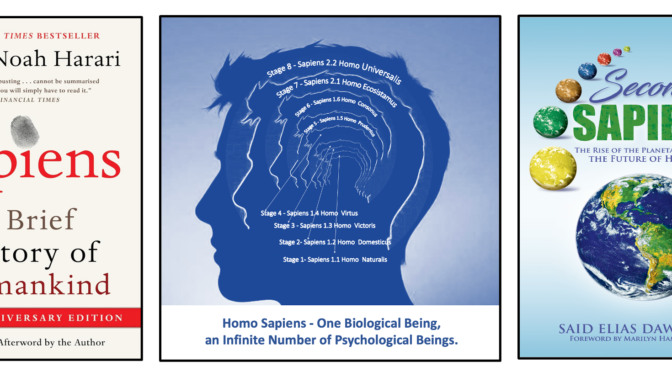
Yuval Noah Harari’s Sapiens captivated millions, and his 10th-anniversary edition, featuring The End of Homo Sapiens and new Afternotes, prompts critical reflection. Having been invited by a colleague to weigh in on these latest insights, this analysis expands upon my initial feedback, contending that Harari’s vision for humanity’s future, while provocative, often overlooks crucial dimensions of human psychological development.
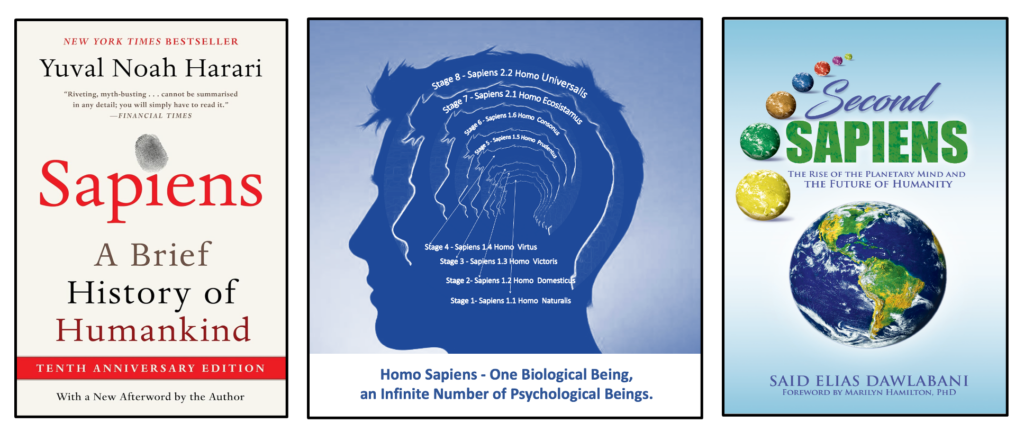
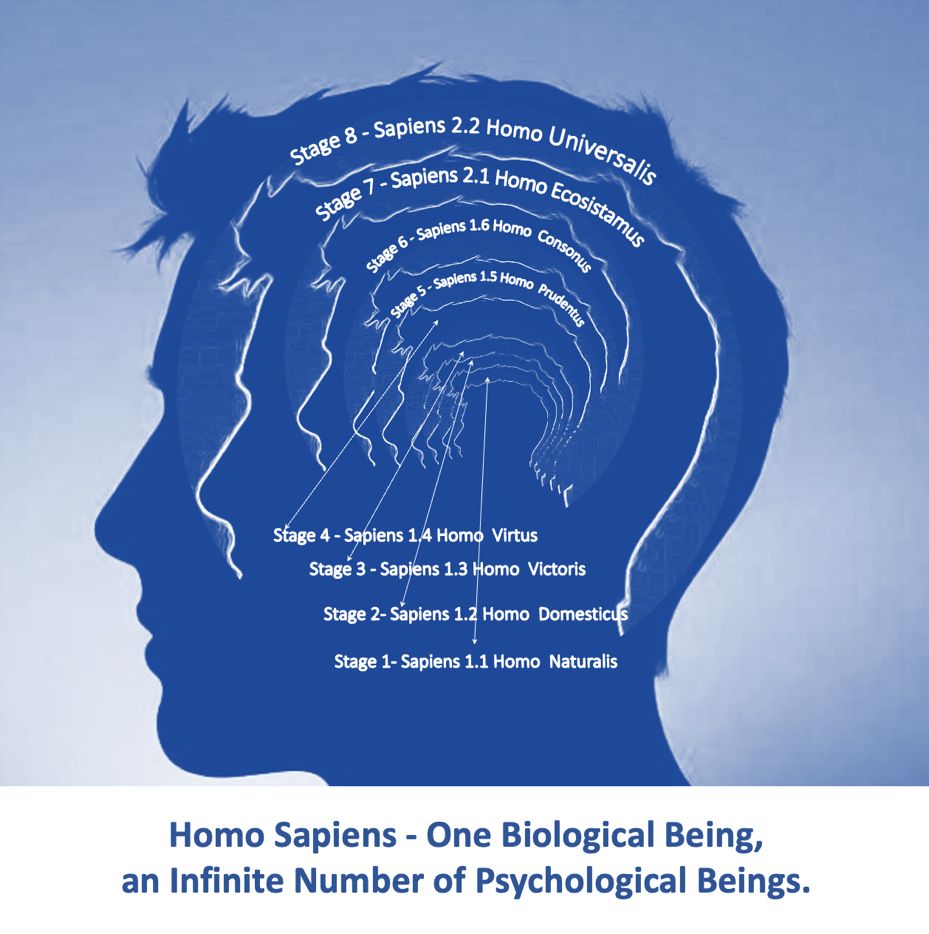
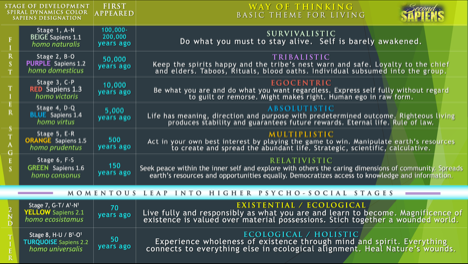
Harari’s assertion that humanity has reached its biological limits, necessitating a new species, is sharply challenged by developmental psychology. Experts like Clare W. Graves, whose research underpins much of my own work, illustrate that Homo Sapiens has remained biologically consistent for 200,000-300,000 years. During this vast period, Graves identifies eight stages of psychological evolution, suggesting that while our biological form endures, our psychological potential remains boundless. Far from ending, humanity, psychologically speaking, is merely emerging from its infancy, continuously activating latent brain capacity as we ascend to higher developmental stages.
Regarding natural selection versus intelligent design, Harari posits Darwinian evolution as the zenith of humanity’s journey. Yet, he appears to bypass compelling research from evolutionary biologists such as Bruce Lipton and David Sloan Wilson, who present cooperation, not competition, as the primary driver of evolution. Harari argues that our future lies in scientific intelligent design—not divinely ordained, but engineered through biological, cyborg, and inorganic means.

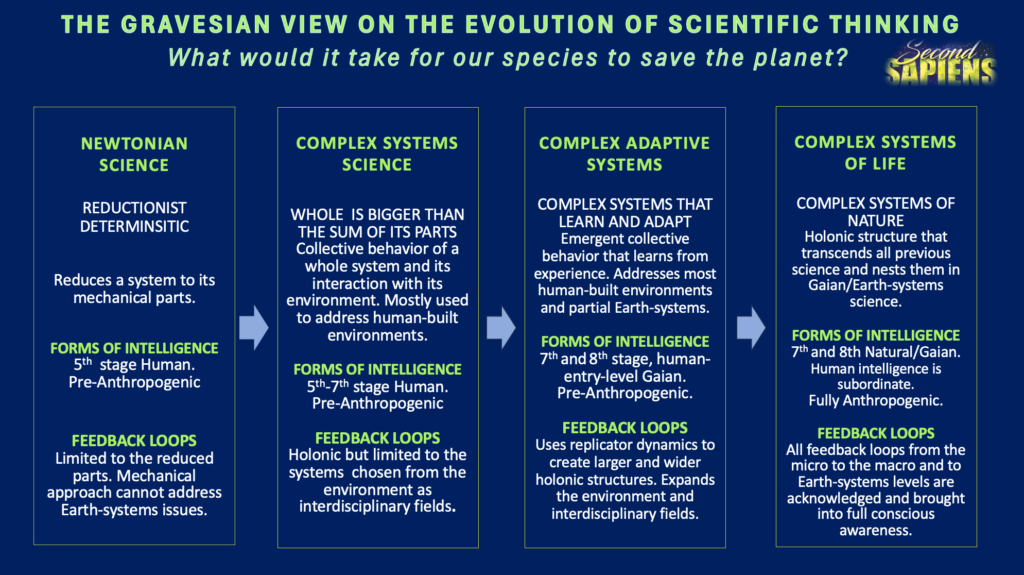
However, his examples for biological/genetic advancement often draw from simpler organisms, seemingly neglecting the complex interplay of environment and mind when applied to humans. Harari attributes our scientific stagnation to species limitations, yet this perspective might instead reflect the confines of a specific developmental stage of the mind—what I identify as stage 5, steeped in Newtonian science. The advanced scientific paradigms he envisions actually correspond to humanity’s stage 7 development, not a new species entirely.

Similarly, bionic intelligence, while beneficial as a supplement (e.g., prosthetics, hearing aids), receives a narrower interpretation. Harari’s characterization of computers and cellphones as bionic extensions overlooks their profound psychosocial impact, contributing to isolation, tribalization, and institutional fragmentation. Moreover, the concept of a “bionic collective brain” isn’t novel; philosophers like de Chardin (noosphere) and scientists like Howard Bloom (global brain) have long explored collective intelligence, often accessible through meditation, altered states, or expanded consciousness. These deeper forms of intelligence, within my developmental model, belong to stage 8, again pointing to an evolution of *Homo Sapiens*, not its replacement.

His third category, inorganic intelligence, is a focal point of my own critique, detailed in Second Sapiens. The notion of continuously learning machines, or AI, inherently carries significant risks. A minor data misinterpretation, seemingly innocuous in an AI’s first iteration, could amplify exponentially over thousands of cycles, leading to dangerous deviations without crucial human oversight and ethical checks. Fundamentally, AI is restricted to mining existing information. When tackling existential threats like climate change, where much of the underlying science is nascent, human-led research and hypothesis formulation remain indispensable. AI cannot “mine the future” or accurately predict it when the necessary foundational science for its programming and training is still being established.

While I concur with Harari’s observations on technological singularity and its potential to surpass current human states, I diverge on the implications. Such advancements, from a developmental standpoint, need not signify the end of our species but rather an accelerant to higher stages of psychosocial existence. The caveat, however, is that this technologically-driven evolution, moving at speeds far outstripping collective human and cultural learning, risks creating profoundly imbalanced higher states, disrupting the 200,000-year patterns of human emergence.
Harari’s Afterword on Frankenstein’s Prophecy reveals similar blind spots, portraying the scientific quest as an unstoppable force, seemingly absolved of responsibility for its discoveries. This stance, which assumes science is inherently benign, overlooks the potential for unchecked scientific pursuits—often fueled by modern technology—to inflict immense damage. My own work traces the ecological crisis to this very scientific mindset, one that has consistently ignored the unforeseen consequences lying beyond its immediate conscious awareness.

In The Animal that Became God, Harari again demonstrates a lack of awareness regarding developmental stages. He frames “Homo Sapiens as God” as the pinnacle of our journey, a representation of the 5th stage of mental development—driven by objective analysis and scientific discovery, placing humanity atop the evolutionary ladder. His justification for needing a new species to “save us” stems from this constrained view. Physics, however, progresses beyond Newtonian models (stage 5) to relativity and quantum theory (stage 6), then to systems thinking and complex adaptive systems (stage 7), culminating in complex adaptive systems of life (stage 8). These are all evolutions *within* Homo Sapiens, propelled by higher purpose and consciousness, transcending the reductive “Newtonian god” that Harari implicitly presents as humanity’s ultimate state.

Harari’s concluding remarks in the tenth edition, acknowledging global challenges since Sapiens’ 2014 publication, parallel the opening of my own book, Second Sapiens. Both works identify a systemic failure among leaders to address existential planetary issues. However, where Harari’s Homo Deus (2017) envisions a transition to a data-centric society, placing ultimate power in AI—a manifestation of the 5th stage’s scientific/algorithmic mind—I see information run amok. Driven by profit, this path risks derailing human progress as much as it promises advancement.

Ultimately, Harari’s historical and species contextualization often lacks an informed perspective on the psychosocial and spiritual dimensions of human existence. He tends to conflate organized religion with our inherent spiritual nature, thereby dismissing a foundational aspect of what it means to be human. He exemplifies a “human exceptionalism” paradigm that positions stage 5 Sapiens as the evolutionary apex, precluding the recognition of higher psycho-socio-spiritual expressions. His scientific arguments, advocating for a data-centric god over human-centric life, lack the nuanced understanding derived from extensive studies of the human mind and ongoing brain research.

Harari appears to relegate consciousness and evolutionary thought to laboratory study or machine replication. While he excels as a synthesizer of history, philosophy, religion, and science, his approach to these fields, as integral philosopher Ken Wilber notes, reflects the “narrow sciences” of fifth-stage human development. The world now demands “sciences of higher order,” transcending the material and reductive frameworks of the past five centuries. My hope is that Harari, with sufficient faith in our species, will explore these higher stages of Sapiens’ development in his future writings.
Like!
1

Viewing Humanity from Jupiter

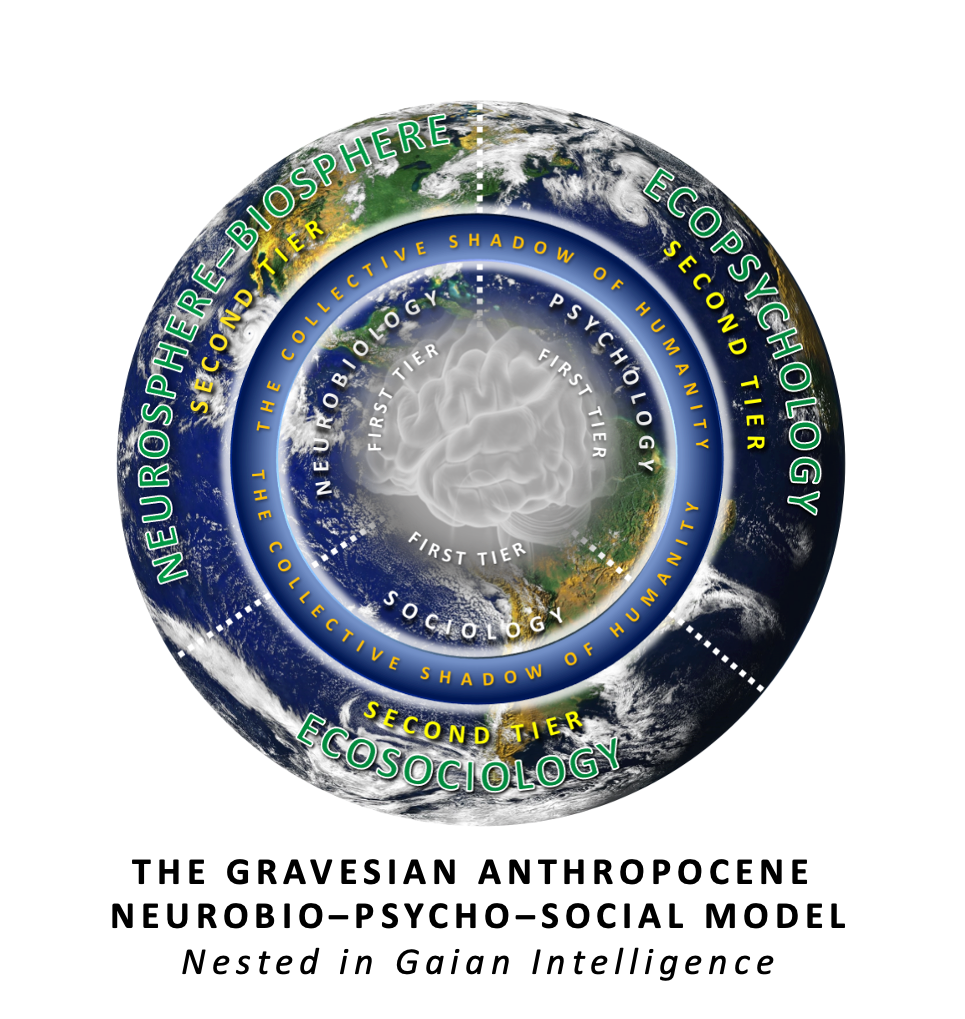
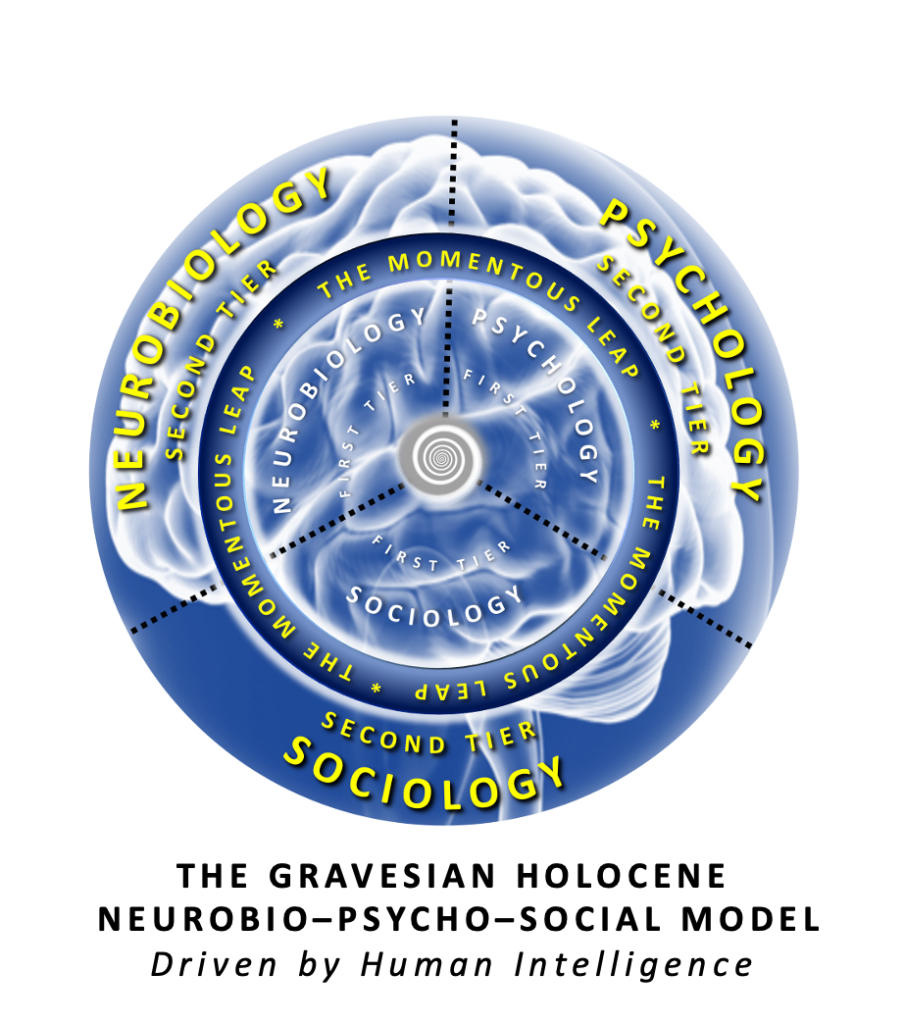
This post was prompted by a recent debate in our developmental community about the nature of leadership needed in the Anthropocene. This is the human development stage that possesses full ecological awareness of Earth’s systems, but represents less than 3 percent of the world’s intelligence today.  It is one of two stages in the Gravesian bio-psycho-social conception that represent the second highest stage of human development, stage seven. The other, stage eight, represents less than 1% of human intelligence and is the highest stage uncovered by Clare Graves’ research. Together the two represent the values of the second tier, what is commonly referred to in the Gravesian – Spiral Dynamics community as the emerging values of humanity. (See model details here).

Much of the conversation in our community today points to the failure of the 7th level system to address existential problems, from political instability and war to environmental issues and everything in between. While that might be true to the way we understand the system’s leadership today, I don’t believe our problems are beyond Graves’ conception the way he envisioned it five decades ago. To me, what we’re witnessing today is part and parcel of the chaos and entropy of the entire First Tier that contains the lower six stages of human and cultural development we have gone through, what Graves called the values of a deficient humanity. Because of our failure to address higher order challenges such as climate change, ecological collapse, and loss of biodiversity at the right time, this stage has become a necessary sequence in the development process, a collective dark night of the soul, so to speak before we can move to second tier intelligence. It will be planetary in nature the way Graves envisioned it, an important theoretical aspect that was sidelined by the subsequent interpretations of Graves’ work, primarily Spiral Dynamics and Integral Theory.

Graves had labeled these two most advanced stages of our development as existential in nature, charged with dealing with macro systems such as world population, environmental degradation and matters of scarce resources. Beck and Wilber watered down Graves’ second tier intelligence by limiting it to human-built systems, or in the case of Wilber, falsely using the model to create a third tier in order to transcend physical existence. It is the human-built systems that are in collapse, which are in turn causing the collapse of natural systems. This mega state of chaos and entropy is part of what I call the Great Obsolescence that takes up 3 chapters in my upcoming book expected to be released in early 2025.

Graves was calling attention to all issues existential in the 1970s. This was the time when systems thinking was born. His concerns were similar to those of Donella and Dennis Meadows, two of the authors of the landmark book Limits to Growth and to James Lovelock and Lynn Margulis the authors of the Gaia Hypothesis and many other systems thinkers like him at the time. Bringing back Graves original conception of these two stages is at the heart of my new work. It accounts for the changes in Life Conditions, which is half of the entire model that makes it dynamic and infuses it with advancements in systems thinking that have taken place over the last five decades. Over that period of time, his life long work has moved from what academics called works of prophecy, to where it is today; a confirmation of an undeniable reality.

Graves’ Second Tier is Existential because First Tier has destroyed our ecology, and in the process triggered the collapse of an exponentially higher order, non-human system; Nature.

My research into Graves’ archives has uncovered that the “Existential” label was driven by the urgency for us to understand the exponentially higher order dynamics driven by what I call “Natural Intelligence.” In essence, we have to mimic Nature in every fractal of existence, from politics, governance, commerce, and everything in between in order for us to have a chance at survival. This is the “reversal” that Graves spoke of; the reversal of much of what we have taken for granted since the first stage emerged 100,000-200,000 years ago. Graves’ trepidations about our ability to ascend to these existential values was captured in a conversation he had with his successor Don Beck in 1980 when he told him that he feared half of the world population will disappear before the world can be stabilized at second tier. Beck shared that prediction with me two decades ago, but only made it public in the 2018 book Spiral Dynamic in Action. According to the latest research, and in spite of all the technological advancements we made, it is believed that number is closer to 70% of today’s world’s population, which is almost double what it was in 1980.

It took me a while and much research into Graves’ archives to figure out why he labeled stage eight, the last known stage in his model as a restrictive existential system as well. If you can imagine what life would be like in a post-collapse scenario, or in what we have to do to successfully mitigate the effects of climate change, the survival of what remains of civilization has to follow an ecological alignment that way Mother Nature conceived it billions of years ago. The restriction is to that and not to some arbitrary ruler claiming the best interest of his/her constituents. It’s a conformity to the dictates of the exponentially higher intelligence of the natural world into which human nature must be subsumed. This scenario must be followed if we’re to ensure the survival of what species remain. In my new book, I call these new conformist values the Gaiametry Protocols and I spend another 3 chapters detailing them. 

In 2016, I had a conversation with Beck about the Marco and Mega systems problems we’re facing. At the time, I wanted to understand them as part of the VUCA craze, an aspect of the human intelligence that thrives on its own sense of exceptionalism and superiority. The issues fell into three distinct categories that have only grown in magnitude since. They were:

  1. The entropy of the post WWII world order driven by what is now becoming a universal fallacy of peace through commerce and the era’s now-outdated geopolitical and financial architecture. 
  2. The pervasive and systemic disruption brought on by the digital age and the rise of artificial intelligence. 
  3. Our utter failure to address climate change effectively. 

Beck’s response to my concerns was that I wasn’t zooming out far enough. “You need to see these existential issues from Jupiter” he told me.  It is by seeing these issues from Jupiter that I was able to articulate The Great Obsolescence.

As cruel as it seems to remain emotionally detached from the ravages of wars and environmental degradation, seeing these issues from Jupiter reminds me of my guru’s response to the death of 250,000 people in 2004 in the aftermath of the Indian ocean tsunami. When prompted for a spiritual meaning of what happened, he responded saying: “It’s Shiva and Shakti playing soccer on higher planes.”  While that death toll is far less than the 5.6 billion people projected to die because of our failure to address climate change and ecological collapse, we have to remind ourselves that this is Mother Nature’s way of restoring ecological balance and reaching homeostasis in the largest system we’ll ever be tasked to understand. It is that understanding of natural intelligence that operates outside human intelligence and is exponentially superior to it. This is what we must embrace. These are the Second Tier values that transcend human-built systems and preserve humanity and what remains of life on the planet.  

Credit for featured image “punic wars.” English Plus Podcast. https://englishpluspodcast.com

Like!
6

FARE THEE WELL, DON BECK!

By Special Guest Keith E. Rice

Don Beck â€“ or ‘Dr Don E Beck’ or ‘Dr Don Edward Beck’ as he frequently preferred to style himself – passed on Tuesday 24 May. He had been relatively inactive for at least a year or so prior to his death.

After my father, he was almost certainly the man who has influenced me most in my life.  Yet I wasn’t close to him nor a confidante to any significant degree. I wouldn’t have called him a friend, more a professional acquaintance. However, his influence on my life has been truly profound.

In my tribute to his one-time business partner Chris Cowan â€“ see Fare Thee Well, Christopher Cowan â€“ who died in 2015, I recalled my first meetings with Don & Chris and how their Spiral Dynamics model transformed my life. It not only lead to resolutions of major issues in my own life but reignited and refuelled (with accelerant!) my interest in Psychology and the behavioural sciences. From there I took a deep dive into Psychology and Sociology, becoming an A-Level teacher in both disciplines. However, my explorations of the behavioural sciences were always underpinned by the first thing Don said that caught my attention at the first workshop of his & Chris’ that I attended in 1998. “You don’t have to throw away any of your favourite theories and approaches,” he said. â€œYou can keep all your ‘isms’. They all fit along the spine of the Spiral.”

Er, well not quite. Spiral Dynamics and the research of Clare W Graves, on which the model was built, tell us nothing about key psychological concepts like temperament or the Unconscious. But an awful lot of psychological concepts do fit – as do many sociological concepts. Don’s words led eventually to my exploring or rediscovering the work of complementary theorists such as Abraham MaslowLawrence KohlbergJane Loevinger and Theodore Adorno. And those explorations eventually led me to an approach I called Integrated SocioPsychology, with workshop programmes (some under my own name; some for Shipley College and Rossett Adult Learning), this website, developing a therapeutic approach largely based on Graves and a book, â€˜Knowing Me Knowing You’.

Don was not just the initial catalyst for all this but he functioned off and on as a sort-of mentor and allowed me to republish several of his writings on this site. He  supported me practically too. In 2002, when I was struggling financially, he sent me $1000 to help keep the website afloat.

After the Beck-Cowan split
Following the acrimonious split between Don and Chris in 1999, I endeavoured to keep in contact with and learn from both men. However, I never saw Chris in person again, our communications gradually diminishing until they effectively ceased after 2009.

Don, however, was heavily involved in the HemsMESH project (1999-2001), supervising it remotely and coming over from the US on several occasions to contribute directly. On one of those occasions, a public meeting with locals, Don debuted a ‘truth meter’ – a supposed electronic true-or-false voting system that could tell whether people were expressing their real views. He worked the PURPLE and RED vMEMES in the room like a magician delighting children with his ridiculous ‘meter’ – leaving Christopher ‘Cookie’ Cooke to put forward themes in a more cerebral manner for the BLUE, ORANGE and GREEN present. At another HemsMESH meeting, Don went totally off-track and started talking about the Israeli-Palestinian conflict. Off-topic he might have been but his exposition on why the PURPLE/BLUE vMEME harmonic led Palestinian kids to throw rocks at Israeli tamks, with the real risk to life of the soldiers firing back, left me sheerly marvelling. I felt as though my jaw was down on the floor!

While he may have been able to expound at length and in real depth from the 2nd Tier, from what I knew of him I felt he was often personally more comfortable thinking and interacting in PURPLE and RED. Loyalty was very important to him and I suspect he struggled with dissent from his perceptions. I well remember him threatening to throw me of the Spiral Dynamics integral list-serve when I challenged his assertion that George W Bush might be operating from YELLOW in the run-up to the 2003 Iraq war. The late Tom Christensen told me in 2015, just before the publication of his Developmental Innovation compendiums, that Don had refused him permission to use the term ‘Spiral Dyamics integral’ in the title because he thought Tom was trying to take over leadership of the ‘constellation’, as Don liked to call practitioners who had trained with him. How true that was I can’t say, but certainly Tom gave the impression Don thought Tom was being disloyal to him.

Don often talked about the difficulties of being an introvert in an extravert’s world. I, too, am an introvert. So when we met again in 2009 at his one-day London workshop, â€˜Spiral Dynamics in Action: Dancing the Integral Vision’, we of course hugged, delighted to see each other again after so many years. And then what? We sat side by side at lunch, barely talking, 2 introverts with limited social skills caught up in our own individual thoughts!

After the spurt of activity later in that year which produced the short-lived Centre of Human Emergence UK, I didn’t see Don again for close on 9 years. However, we remained in sporadic contact. He contributed artifacts and recollections to my chronicling of his work in South Africa and his role in the dismantling of Apartheid; and there was (very briefly!) talk of me accompanying him on a trip to a peace conference in Jerusalem. There was even idle talk of me writing his biography.

I last saw Don in May 2018 at Said E Dawlabani’s Spiral Dynamics Summit on the Future in Texas. At 82 years old, a survivor of heart surgery a few years before and with his wife Pat terminally ill with cancer, he seemed frail and, at times, distracted. But he managed to get up on to the speaker’s platform and spoke as powerfully as when I had first heard him 20 years before. Like the disciple of a guru, I was thrilled to bits when he congratulated me on my presentation.

Don with the new ‘Spiral Dynamics in Action’ book (Photo courtesy Said E Dawlabani)

Don Beck’s Legacy
There are others who know Don’s history much better than I do and are far more qualified to evaluate his legacy
but here are some thoughts.

His work in South Africa is arguably his crowning achievement and yet you won’t find much, if any, mention of him in any of the Nelson Mandela biographies or other books on the early 1990s transition. Don is not even indexed on the  Nelson Mandela Foundation web site â€“ though, after much searching, I did find an article in which he is discussed. Yet he was commended by both Mandela and political rival Mangosutu Buthulezi; and honoured by a joint resolution of both houses of the Texas Congress for his work in South Africa. Could it be that Don simply was not good at raising his own profile?

He did, however, inspire many others to apply Graves’ concepts in practical difference-making applications – eg: Cookie and myself in HemsMESH, Bjarni SnĂŠbjörn JĂłnsson in IcelandFred Krawchuk in Afghanistan â€“ while the work Don did with Elza Maalouf and others in the Middle East had the potential to be the start of a new peace process. (Their work is described in Elza’s book, â€˜Emerge!: The Rise of Functional Democracy and the Future of the Middle East’.)

It could be argued that Beck & Cowan were poor custodians of Graves’ legacy in that they largely failed to get academic recogntion of the criticality of Graves’ work to understanding human nature. However, both men would have argued that they were more concerned with making a difference in the ‘real world’ with practical applications of Graves’ concepts. Don, though, did succeed in getting German researcher Marc Lucas to include Gravesian materials in his groundbreaking fMRI studies into neural activities when making values-based decisions. (Lucas’ work is discussed in A Biological Basis for vMEMES
?)

Though he was later to dissent from the way Ken Wilber tried to develop Spiral Dynamics in a less scientific and more ‘spiritual’ direction, Don’s post-Cowan partnership with Wilber introduced Graves’ work to a whole new audience of those who subscribed to Wilber’s Integral Theory concepts. Hence, Spiral Dynamics integral. Don also took Wilber’s All Quadrants/All Levels model and ‘spiralised’ it into the powerful analytical tool 4Q/8L.

Don’s passing feels like the end of something. There are plenty of people using Graves/Spiral Dynamics who have been trained by or worked with Don who will keep those concepts alive. As well as those already mentioned, key figures include Jim Lockard in France, Jon Freeman in the UK and Peter Merry and Auke Van Nimwegen in Holland. Then there are those who have trained with Chris Cowan and still subscribe to his widow Natasha Todorovic’s very management consultancy-oriented take on Spiral Dynamics. But Don somehow gave his constellation hope, vision and a sense of unity which seems to have faded a little over the past year or so.  Hopefully some of those key figures mentioned will emerge into leadership to take Don’s vision forward.

For me, while I’ve had my criticisms of him and we’ve certainly not seen eye-to-eye at times, my memories of him and the differences he made to my life are precious and indelible.

Like!
6